Ocarina of Time
The hero who traveled through time to save a kingdom from eternal shadow.
The Legend of Zelda: Ocarina of Time stands as a monumental pillar in the franchise's history, marking the series' transition from two-dimensional adventures to fully realized three-dimensional worlds. Released in the late 1990s, it chronicles the journey of Link, the Hero of Time, as he navigates a fractured timeline to stop the sorcerer Ganondorf from seizing the Triforce and plunging the kingdom of Hyrule into eternal darkness.
At its heart, this narrative is a tale of destiny, sacrifice, and the passage of time. It introduces the iconic mechanic where the protagonist travels seven years into the future, witnessing the decay of his homeland while retaining his childhood wisdom. The story revolves around the sacred Ocarina of Time, an instrument capable of manipulating temporal flow, which serves as the key to awakening the Sages and sealing away the ultimate evil.
- Protagonist
- Link (Hero of Time)
- Antagonist
- Ganondorf Dragmire
- Key Artifact
- Ocarina of Time
- Primary Setting
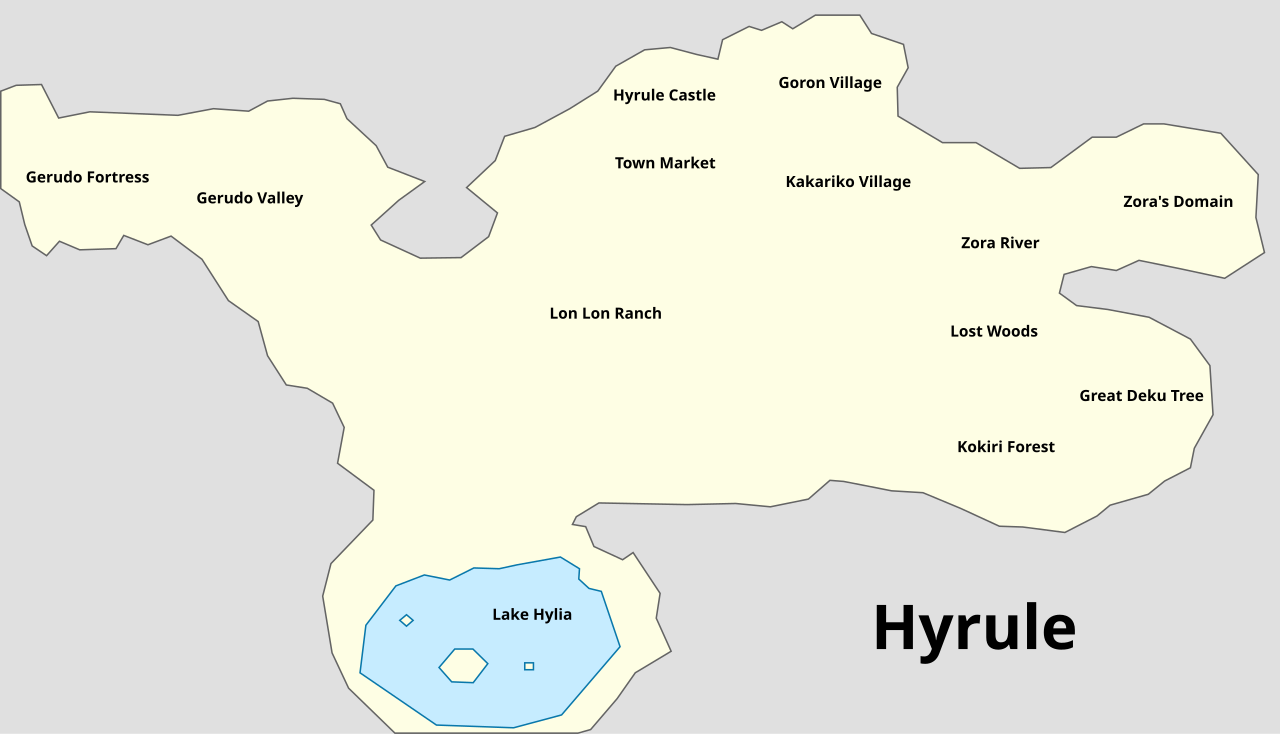
- Kingdom of Hyrule
- Significance
- First 3D entry in the series, established the timeline split
Lore & Background
Ultimately, the story concludes with a unique temporal resolution. After defeating Ganondorf, Princess Zelda uses the Ocarina to send Link back to his childhood, before he ever pulled the sword. This act creates a branching timeline: one where the Hero never fell, another where he succeeded but was sent away, and a third where he failed entirely. This decision preserved Link's memories while altering history, cementing the game's legacy as the origin point of the series' complex chronology.
In Their Own Story
Seven years after the Master Sword was pulled from its pedestal, Hyrule Castle Town no longer bustled with life; it stood as a hollow shell of ash and silence. The Hero of Time, now grown but retaining the heart of a child, stepped into the shadow of Ganondorf's tyranny. Before him loomed the corrupted Temple of Light, its stone weeping black ichor like tears of despair. Clutching the Ocarina of Time, he played a melody lost to history. The air shimmered with temporal energy, rousing the ancient Sages from their slumber. Their eyes opened, not just to witness his return, but to anchor the dawn against the encroaching eternal night.
Reader's Guide
Ocarina of Time redefined adventure gaming by weaving a narrative that spans decades within a single playthrough. The journey begins in the verdant Kokiri Forest, where a young boy discovers he is not one of them, but the chosen hero destined to stop Ganondorf. His path is paved with collecting Spiritual Stones and learning melodies from Princess Zelda—songs that act as keys to unlock doors across time and space.
The game's brilliance lies in its dual-era structure. As a child, Link navigates hidden passages and solves puzzles requiring small stature; as an adult, he commands heavy weapons but faces foes grown monstrous in his absence. This duality forces players to think across generations: a lever pulled in childhood might open a gate in adulthood, or a dungeon cleared as a child could reveal a new path years later.
The climax drives toward Ganondorf's fortress, culminating in a battle against the King of Evil and his beast form, Ganon. Yet victory brings no simple closure. In a final act of mercy, Zelda uses the Ocarina to send Link back to the moment before he pulled the sword. This decision fractures history into three distinct timelines: one where the hero never fell, another where he succeeded but was cast away, and a third where he failed entirely—cementing this game as the genesis of The Legend of Zelda's complex chronology.
Did You Know?
- It was the first Legend of Zelda game to feature fully three-dimensional graphics and motion controls for targeting enemies.
- The 'Z-targeting' system introduced here became an industry standard for third-person action games worldwide.
- The game's soundtrack, composed by Koji Kondo, is widely considered one of the greatest in video game history.
- Pulling the Master Sword triggers a time skip that changes the entire world layout and character models.
Gameplay Innovations and Quality of Life
The 3DS remake preserves the core action-adventure mechanics of its 1998 predecessor while integrating modern handheld capabilities to enhance usability. A significant addition is the utilization of the bottom touchscreen for managing inventory, streamlining item selection without pausing gameplay. This screen also allows players to perform ocarina songs directly via touch inputs. Furthermore, the system's gyroscopic sensors enable a first-person aiming mode for ranged weapons like the bow and hookshot, offering an alternative to traditional analog controls. The game introduces a 'Boss Challenge' mode, permitting sequential or individual boss battles, with a mirrored version available in Master Quest where enemies deal double damage. To assist newcomers, brief hint videos known as 'Visions' are accessible through Sheikah Stones located in Kokiri Forest and the Temple of Time. Additionally, the original Rumble Pak functionality is replaced by the Shard of Agony, which emits an audio cue to signal nearby secrets rather than providing haptic feedback.
Development Philosophy and Technical Upgrades
Co-developed by Grezzo under Nintendo's supervision, this title was designed with a specific demographic in mind: fans who originally played as children are now young adults. Shigeru Miyamoto emphasized waiting until the mid-2010s to ensure players could appreciate the majestic scenery of Hyrule through stereoscopic 3D immersion. Technically, the game runs at a smoother 30 frames per second compared to the original's 20 fps, and previously pre-rendered backgrounds in areas like the Market are now fully real-time polygonal environments. A unique aspect of development was the decision to retain certain bugs from the N64 version; developers felt these quirks were part of the nostalgic charm that fans shared with friends, fixing only those that caused significant issues. Producer Eiji Aonuma noted that including and adjusting the Master Quest campaign was intended to make the experience more formidable for returning veterans seeking a greater challenge.
Critical Reception and Commercial Performance
Upon its June 2011 launch, the remake garnered widespread critical acclaim, with many reviewers hailing it as one of the finest video game remakes ever produced. The title achieved substantial commercial success, selling over 6.44 million units globally by late 2022 to become the thirteenth best-selling game on the Nintendo 3DS platform. Its popularity was further evidenced by a digital release via the eShop in 2012 and its eventual re-release under the budget-friendly Nintendo Selects label in March 2016 after the original retail cartridges were discontinued. The game's success paved the way for a similar treatment of another classic, leading to the development and release of Majora's Mask 3D four years later. Its enduring sales figures underscore its status as a definitive version of the source material for both legacy fans and new audiences discovering the series on handheld hardware.
Marketing Campaigns and Global Promotions
The promotional strategy for this title was extensive, featuring region-specific pre-order bonuses and high-profile celebrity endorsements. In Australia, EB Games offered an 'Ocarina Edition' with a playable instrument and music sheets, while Greek retailers provided bundles including hats and Deku Tree seed cans. UK and US pre-orders included exclusive artwork cases and posters, alongside free soundtrack copies for Club Nintendo registrants across multiple regions. Marketing efforts were bolstered by a memorable commercial starring actor Robin Williams and his daughter Zelda, who was named after the series' princess. In Japan, popular boy band Arashi appeared in television spots to drive awareness. Nintendo also executed online website takeovers during release week and sustained print advertising campaigns throughout the summer season to maintain visibility for this landmark handheld adaptation.
Gallery