Death Mountain
The fiery heart of Hyrule, where brave souls forge their destiny amidst molten rock.
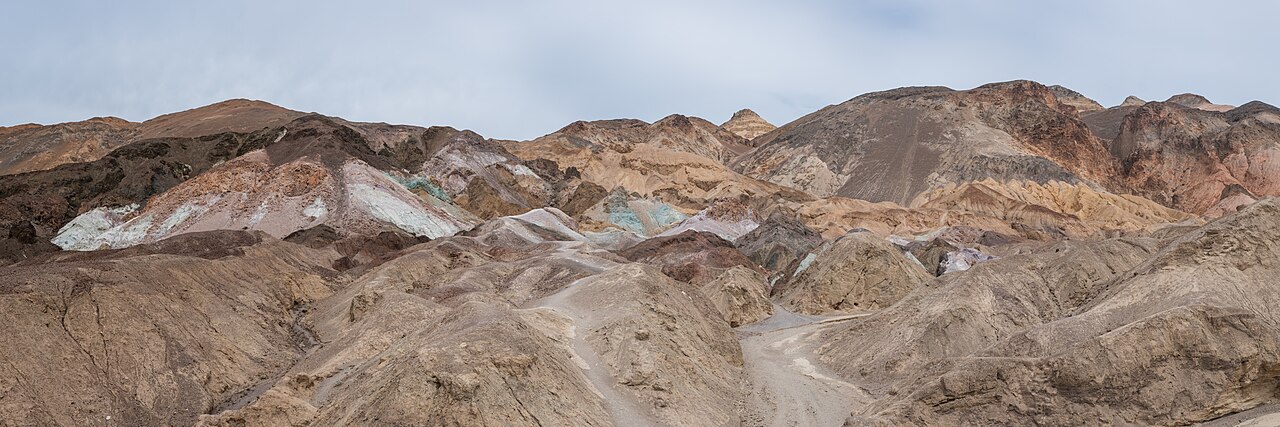
Death Mountain is not merely a volcano; it is the throbbing, molten heart of Hyrule's north, where the earth itself seems to breathe fire. This colossal peak serves as the sacred fortress of the Goron tribe, a realm where scorching winds and jagged obsidian define existence. More than a geographical barrier, it is a spiritual crucible. Here, the ancient dragon Valoo once slumbered in peace before being corrupted by Ganondorf into the fearsome Volvagia, who attacked Goron City, blurring the boundary between the physical world and the fiery abyss and making every ascent a pilgrimage into the unknown.
- Inhabitants
- Goron Tribe
- Primary Element
- Fire / Earth
- Key Location Type
- Volcanic Mountain Range & Dungeon Hub
- Notable Guardian
- Daruk (Champion and King of the Gorons) / Volvagia (Corrupted Dragon)
- Cultural Significance
- Sacred Home of the Gorons
Lore & Background
For eons, Death Mountain has been revered as the cradle of the Goron people—a race forged in rock who find joy in rolling down slopes that would shatter lesser beings. The mountain's geothermal pulse is their lifeblood; without its radiant heat, the Gorons would wither, while Hylians face instant incineration without the protection of the Goron Tunic or magical resistance. Legends whisper that the mountain is a living entity, its deep, rhythmic tremors mimicking the heartbeat of the earth itself.
This is no passive landscape; it is a testing ground where heroes are tempered by fire and stone. The presence of ancient dragons like Valoo and the constant threat of lava flows create an environment where only the most resilient can tread. It is here that the unbreakable bond between the Gorons, led by their King Daruk, and Hyrule's royalty is forged in magma, symbolizing an alliance as enduring as the bedrock beneath their feet.
In Their Own Story
The air didn't just shimmer; it warped, distorting the jagged obsidian path into a hallucination of heat. Below, the valley floor was a churning sea of orange and red, but up here, the wind carried the acrid sting of sulfur and the dust of ages. A Goron elder rolled past with a thunderous laugh, his laughter echoing off the trembling walls as he navigated the fissures cracking open near the summit. "The mountain speaks today," he rumbled, gesturing to the glowing veins pulsing in the rock. "It warns us that the shadow grows deep within." The hero tightened their grip on the shield, feeling the heat radiating through the soles of their boots, a warning that beyond this peak lay a dragon's lair and Hyrule's fate hanging precariously in the balance.
Reader's Guide
Death Mountain stands as Hyrule's most iconic and unforgiving volcanic region, located to the north or northeast depending on the era. Its narrative weight is immense: it houses the ancestral home of the Gorons and contains dungeons critical to thwarting fire-based calamities.
Traversing this realm demands preparation. Visitors must contend with rising lava tides, suffocating ambient heat, and aggressive fauna like Fire Keese and Rock Octoroks that thrive in the inferno. Progression is often gated by specific necessities: acquiring heat-resistant attire to survive the climb or mastering the Goron's rolling technique to navigate steep, unstable terrain where a single misstep means doom.
Did You Know?
- While some legends speak of dragon spirits guarding the depths, Volvagia was not a deity but a dragon corrupted by Ganondorf who terrorized Goron City in Ocarina of Time.
- In many timelines, the summit is the sole source of rare fire-resistant materials and precious ores essential for crafting legendary armor.
- The Goron culture revolves around high-speed rolling, a unique tradition evolved to safely traverse the mountain's treacherous, near-vertical slopes.
- Daruk, the King of the Gorons and one of Hyrule's Champions in Breath of the Wild, is celebrated for his strength and loyalty, not as a 'Spirit of Courage,' a title associated with the Goddess Farore or Link.
Origins of Hyrule
The land of Hyrule originated from the creative vision of Shigeru Miyamoto, who conceived it as a personal 'miniature garden' that could be revisited at any time. Drawing heavily from his childhood explorations in the Kyoto countryside, Miyamoto aimed to recreate a sense of genuine adventure and discovery within a digital space. Working alongside Takashi Tezuka, he crafted a high-fantasy realm inspired by literary giants like J.R.R. Tolkien, initially visualized through a top-down perspective. The development process was deeply collaborative; early concepts were sketched on whiteboards and long strips of paper as the duo sat side-by-side designing the world's geography. While the project began with a focus on underground dungeons beneath mountains, Miyamoto felt compelled to expand the scope above ground, adding forests and lakes that eventually formed the expansive Hyrule Field. This evolution transformed the game from a simple dungeon crawler into a rich, nonlinear environment where players could freely choose their paths, fostering a unique sense of exploration that defined the franchise's identity from its 1986 inception.
Evolution of World Design
The architectural and visual presentation of Hyrule has undergone radical transformations since the original title launched on the Famicom Disk System. Initially designed as a 2D map filled with mazes, hidden rooms, and difficult-to-locate dungeons, the world was structured to challenge players' navigation skills over several hours. The design philosophy shifted dramatically with the release of Ocarina of Time in 1998 on the Nintendo 64, which transitioned the setting into a fully realized three-dimensional environment. This leap allowed for more complex spatial interactions and immersion. Decades later, Breath of the Wild pushed these boundaries further by developing Hyrule into a seamless open world accessible via Wii U and Switch consoles. Throughout these technological advancements, the core intent remained consistent: to provide a vast landscape where players could encounter monsters, solve puzzles, and uncover secrets at their own pace, establishing landmark innovations in world design that influenced countless developers across the industry.
The Eternal Cycle of Conflict
At the heart of the series' lore lies an endless cycle of reincarnation driven by ancient curses. This narrative framework was established in Skyward Sword, which serves as the chronological beginning of the timeline and introduces the antagonist Demise. His dying curse ensures that the spirits of Link and Zelda will be reborn repeatedly throughout history to protect Hyrule from evil whenever it threatens the world. While the specific characters bearing these names change across thousands of years, their roles remain constant: Link acts as the courageous hero, often a young Hylian man with pointed ears, while Princess Zelda provides guidance as a member of the royal family. Their primary adversary is usually Ganon, who relentlessly seeks the Triforce to gain ultimate power. Although players typically control Link, the 2024 release Echoes of Wisdom marks a significant shift by making Zelda the main playable character, highlighting her integral role in this perpetual struggle against darkness.
Cultural Foundations and Races
The universe of The Legend of Zelda is built upon a rich tapestry of fictional cultures, languages, and races that mimic medieval European fantasy. The most prominent inhabitants are the Hylians, a humanoid race distinguished by their long, pointed ears, who populate the lands alongside various monsters and creatures. The world features its own creation myths and multiple fictional alphabets, with the Hylian script being the most widely recognized. Economic interactions within these realms utilize the rupee as an almost-universal currency, facilitating trade and progression throughout the games. This detailed world-building is not merely aesthetic; it grounds the narrative in a cohesive reality where history spans millennia. The franchise's lore has been meticulously organized by Nintendo into a complex timeline that connects disparate stories, ensuring that every game contributes to a larger, interconnected mythology that continues to expand with each new entry.
Gallery
Frequently Asked Questions
Who inhabits Death Mountain?
Death Mountain serves as the primary residence for the Goron Tribe, a race of rock-like beings adapted to extreme heat. They utilize this volcanic range as their main stronghold where they mine minerals and worship their deities amidst the terrain.
What is the elemental nature of the region?
The area is defined by intense heat, flowing magma, and jagged obsidian cliffs that make traversal dangerous for outsiders. Its primary elemental association is Fire, reflecting the constant volcanic activity that shapes the landscape.
How does Death Mountain relate to dragon lore?
In Ocarina of Time, the ancient dragon Valoo resides in the crater until Ganondorf corrupts him into the monster Volvagia. This transformation turns the mountain's heart into a dungeon where Link must battle the beast to save the Gorons.
Who is the notable guardian or leader associated with it?
During the era of Hyrule's Champions, King Daruk served as the protector and leader of the Gorons within these peaks. His divine power was tied closely to the mountain's resilience against Calamity Ganon in Breath of the Wild.
Why is Death Mountain significant to Hyrule?
Beyond being a source of valuable minerals, the mountain acts as a testing ground where heroes prove their courage. It frequently serves as a key dungeon location or strategic barrier in Hyrule's northern geography throughout various eras.